Wakaba Oto
Shogun Season 2 Enters Production, Expanding Beyond Its Original Historical Arc
After ending at the brink of victory, Shogun returns to explore what comes after — where alliances harden into systems and power becomes rule.
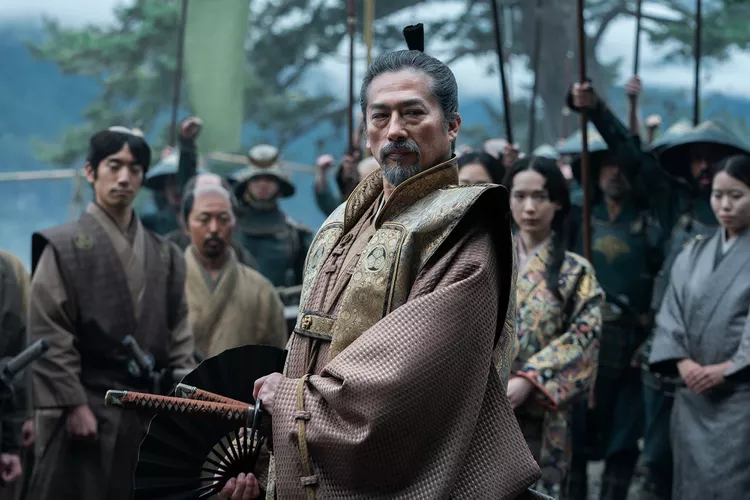
Shogun is officially returning. In a cast video shared this week, lead actor and producer Hiroyuki Sanada confirmed that Season 2 is now in production.
The announcement answers a question that has lingered since the show’s 2024 debut — whether a series originally conceived as a limited adaptation would continue at all.
Season 1 closely follows Shogun, the 1975 historical fiction novel by James Clavel, which itself draws on the rise of Tokugawa Ieyasu at the end of Japan’s Sengoku period.
The series builds toward a familiar historical turning point: the power struggle that culminates in the Battle of Sekigahara. That conflict would ultimately secure Tokugawa dominance and, a few years later, formalize his rule as shogun in 1603.
But the show doesn’t depict any of that directly. Instead, it ends earlier — at the point where the outcome is no longer in doubt. Political alliances have shifted, opposition has weakened, and Toranaga’s position is effectively secured before the battle takes place.
On paper, the narrative is complete. Major character arcs reach their endpoints, and the central conflict is resolved in strategic terms.
Historically, though, the most consequential developments are still ahead.
Tokugawa Ieyasu’s victory at Sekigahara was not the end of the story but the beginning of a longer process: consolidating authority, restructuring political control and establishing a system that would govern Japan for over two centuries.
That gap — between victory and rule — is where Season 2 will likely operate.
From Adaptation to Historical Extension
The first season exhausts its source material. Any continuation moves beyond Clavell’s novel and into a broader historical framework.
There is no shortage of direction. Early Edo-period Japan provides a clear structure the series can follow, including: the formal establishment of the Tokugawa shogunate, the reorganization of regional power under centralized rule, ongoing tensions involving foreign traders and missionaries, and the gradual elimination or marginalization of rival factions
Lead actor Hiroyuki Sanada has indicated that future seasons will continue to follow historical developments, suggesting that the series will remain anchored to real events even as it moves past its original narrative base.
Season 1 is driven by uncertainty — shifting loyalties, unstable alliances, competing claims to power. Season 2, by contrast, moves into a period where the outcome is largely decided, and the focus shifts to how that outcome is enforced.
While production is now underway, details remain limited. The announcement confirms production is underway, but a release is still distant — with industry timelines suggesting a likely premiere in late 2027 or even 2028.
It’s a long gap, though not entirely surprising for a production of this scale.
In the meantime, the first season continues to hold its position as one of the most critically acclaimed series in recent years, praised for both its storytelling and its meticulous visual world-building.
LATEST